
Starting a business is exciting. Scaling one is expensive.
You can have a brilliant product, a strong website, and an enthusiastic team—but if every new customer costs more than they are worth, growth quickly turns into a cash-flow problem.
That is why Performance Marketing can be one of the most powerful growth engines for a startup. Done correctly, it connects advertising spend with measurable outcomes such as qualified leads, purchases, bookings, sign-ups, or revenue.
Done badly, it becomes a very efficient way to waste money.
The difference is not simply the size of your advertising budget. It is the quality of your Marketing Strategy, measurement system, offer, creative, landing page, and follow-up process.
For startups, the goal should not be:
“How much can we spend on ads?”
It should be:
“How much can we profitably invest to acquire our next customer—and how quickly can we learn what works?”
This guide explains how to build a Performance Marketing strategy that is designed for sustainable startup growth rather than vanity metrics.
What Is Performance Marketing?
Performance Marketing is a results-focused approach to Digital Marketing in which campaigns are planned, measured, and optimized around specific business outcomes.
Those outcomes might include:
- Qualified leads
- Product purchases
- Demo bookings
- Website enquiries
- App installations
- Phone calls
- Subscriptions
- Revenue
This is what makes Performance Marketing different from simply “running ads.”
For example, getting 10,000 impressions may look impressive. But if those impressions produce zero qualified customers, they have limited business value.
Modern marketing measurement is increasingly focused on outcomes such as lead quality, lead-to-customer conversion rate, ROI and customer acquisition cost. HubSpot’s 2026 research identifies lead quality/MQLs, lead-to-customer conversion rate, ROI and CAC among the leading marketing KPIs.
That shift matters enormously for startups.
Because startups usually cannot afford to optimize for attention alone.
They need to optimize for learning, customers, revenue, and profitability.
Performance Marketing vs Traditional Digital Marketing
One of the biggest misconceptions is that Performance Marketing and Digital Marketing are the same thing.
They overlap, but they are not identical.
Digital Marketing is the broader ecosystem. It includes SEO, content marketing, social media, PPC, websites, influencer marketing, Email Marketing, and more.
Performance Marketing is more heavily centered on measurable outcomes and continuous optimization.
| Digital Marketing | Performance Marketing |
|---|---|
| Broad marketing ecosystem | Results-driven marketing approach |
| Includes branding and awareness | Strong focus on measurable actions |
| Can include long-term visibility goals | Usually tied to specific KPIs |
| SEO, social, content, email, PPC, etc. | Paid media, conversion optimization, attribution and measurable acquisition |
| Success can include reach and engagement | Success is increasingly judged by leads, customers, revenue and profitability |
A strong startup should not choose one over the other.
The smarter approach is to use both.
For example:
SEO can build long-term organic visibility.
Paid advertising can capture demand immediately.
Content can answer customer questions and build trust.
Email Marketing can nurture leads and encourage repeat purchases.
Together, these channels can create a more efficient customer acquisition system.
KRK Digitals similarly positions its digital marketing offering around integrated services including SEO, PPC, social media, content marketing, lead generation and ongoing campaign optimization.
Why Startups Waste Money on Advertising
Most startup advertising failures are not caused by the advertising platform itself.
They usually happen because the startup starts spending before understanding the economics of the funnel.
Consider this simple chain:
Ad → Click → Landing Page → Lead → Sales Call → Customer → Repeat Purchase
A weakness anywhere in this chain can increase your CAC.
For example:
Great ad + wrong audience = wasted spend
Great targeting + weak offer = expensive clicks
Great campaign + poor landing page = lost conversions
Great leads + slow sales follow-up = lost customers
Great acquisition + weak retention = poor lifetime value
This is why Performance Marketing should never be treated as an “ads-only” activity.
Your advertisement is only one part of the customer journey.
The First Rule: Know Your Numbers Before You Scale
Before increasing the budget, define your basic unit economics.
At minimum, calculate:
Customer Acquisition Cost
CAC = Total Marketing & Sales Costs ÷ New Customers Acquired
Suppose a startup spends ₹1,00,000 and acquires 50 customers.
Its CAC is:
₹1,00,000 ÷ 50 = ₹2,000
Now compare that with your average contribution or gross profit per customer.
If a customer generates only ₹1,500 in contribution, increasing ad spend is not scaling.
It is accelerating the loss.
That is why startups should calculate their acceptable CAC before aggressively increasing budgets.
Don’t Optimize for Cheap Leads
This is one of the most expensive mistakes a startup can make.
Imagine two campaigns:
| Metric | Campaign A | Campaign B |
|---|---|---|
| Ad Spend | ₹50,000 | ₹50,000 |
| Leads | 250 | 100 |
| Cost per Lead | ₹200 | ₹500 |
| Customers | 5 | 20 |
| CAC | ₹10,000 | ₹2,500 |
| Revenue | ₹75,000 | ₹3,00,000 |
At first glance, Campaign A looks fantastic.
It generates leads at only ₹200.
But Campaign B is the better business investment.
Why?
Because cheap leads are not necessarily valuable leads.
The real question is not:
“How cheaply can we generate a lead?”
It is:
“How efficiently can we generate a customer who creates profitable revenue?”
HubSpot’s 2026 data reflects this broader shift toward lead quality and lead-to-customer conversion rather than simply maximizing lead volume.
Build a Performance Marketing Strategy Around the Funnel
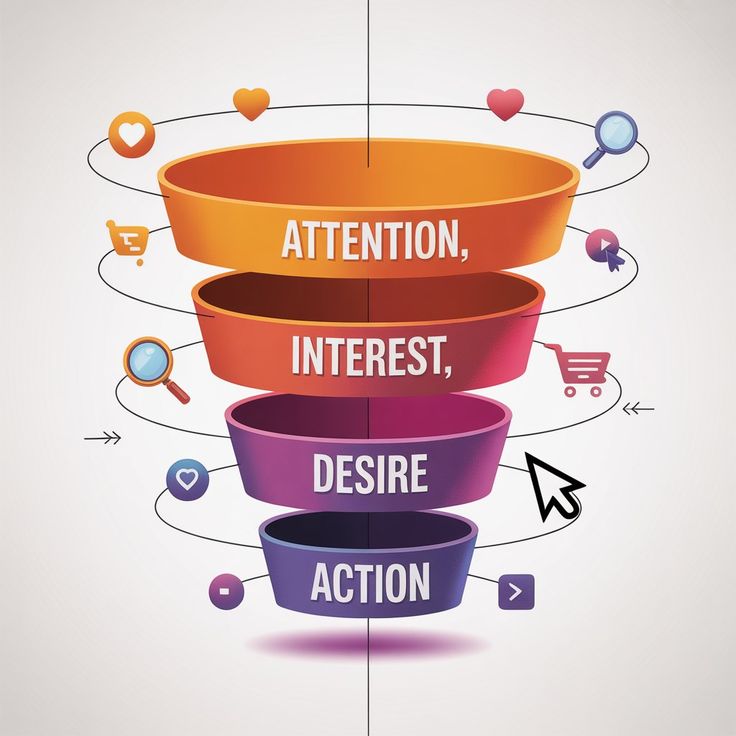
1. Awareness
At this stage, customers may not know who you are.
Your job is to communicate:
- Who you help
- What problem you solve
- Why your solution is different
Short-form video, social content, creators, educational content and broad paid campaigns can help here.
Meta continues to invest heavily in AI-powered recommendation, creative and ad-ranking systems, with its 2026 updates emphasizing stronger creative and campaign performance across its platforms.
2. Consideration
Now the user knows your brand but has not purchased.
This is where trust becomes critical.
Use:
- Customer reviews
- Case studies
- Demonstrations
- Comparisons
- FAQs
- Testimonials
- Product explainers
Your landing page should answer the questions that stop a prospect from taking the next step.
3. Conversion
This is where Performance Marketing becomes highly measurable.
Track actions such as:
Ad click → Landing page view → Form submission → Qualified lead → Sale
Do not stop measurement at the form submission.
A startup should ideally connect marketing data with sales outcomes.
Google Analytics supports conversion measurement and attribution across journeys, including different touchpoints that contribute to important actions.
4. Retention
The first purchase should not necessarily be the end of your funnel.
Existing customers can often be easier and more economical to monetize than continuously finding completely new audiences.
This is where:
- Email Marketing
- Remarketing
- Loyalty campaigns
- Cross-selling
- Upselling
- Educational content
- Customer communities
can become valuable.
How Much Should a Startup Spend on Performance Marketing?
There is no universal number.
A ₹10,000 monthly budget may be enough for an early-stage local business to test messaging.
A funded SaaS company may have a much larger testing budget.
The important principle is:
Budget for learning before budgeting for scale.
A startup could divide an early experimental budget conceptually into:
| Activity | Example Allocation |
|---|---|
| Campaign testing | 40% |
| Best-performing campaigns | 30% |
| Creative testing | 15% |
| Retargeting | 10% |
| Experimental channel | 5% |
These percentages are not fixed rules.
The right allocation depends on your sales cycle, margins, audience size, product price and conversion rates.
Start small enough to learn.
Then scale only when the data supports it.
The 7-Step Startup Performance Marketing Framework
Step 1: Define One Primary Goal
Do not launch a campaign with five competing objectives.
Choose the most important outcome.
For example:
Generate qualified B2B leads
or
Generate e-commerce purchases
or
Drive demo bookings
Clarity improves measurement.
Step 2: Define Your Ideal Customer
Know exactly who you want to acquire.
Document:
- Problem
- Intent
- Industry
- Location
- Buying trigger
- Budget
- Objections
- Decision-making process
The better your customer understanding, the better your creative and targeting decisions become.
Step 3: Create a Strong Offer
A weak offer cannot be rescued by clever advertising.
Ask:
Why should someone choose us today?
Your offer could include:
- Free consultation
- Product trial
- Demo
- Introductory discount
- Free audit
- Bundle
- Limited-time incentive
- Valuable downloadable resource
The offer should reduce perceived risk and make the next action obvious.
Step 4: Build a Conversion-Focused Landing Page
Your landing page should match the promise made in the advertisement.
It should communicate:
Problem → Solution → Proof → Benefit → CTA
Avoid overwhelming visitors with unnecessary information.
A startup should test things like:
- Headline
- CTA
- Form length
- Social proof
- Pricing presentation
- Product images
- Page speed
- Trust signals
Sometimes improving the landing page is more profitable than increasing the ad budget.
Step 5: Track the Entire Customer Journey
Don’t stop at CPC or CPL.
Track:
Click → Lead → Qualified Lead → Opportunity → Customer → Revenue
Google’s attribution documentation explains that customer journeys can include multiple touchpoints and that different attribution approaches can distribute credit across those touchpoints.
This is important because the platform reporting the final conversion may not tell the complete story of how the customer discovered and evaluated your brand.
Step 6: Test One Variable at a Time
Do not change your audience, headline, offer, landing page and creative simultaneously.
You won’t know what caused the improvement—or the failure.
Test systematically:
Creative A vs Creative B
Offer A vs Offer B
Landing Page A vs Landing Page B
Audience A vs Audience B
Performance Marketing becomes powerful when every campaign creates a new piece of knowledge.
Step 7: Scale Gradually
Once you have a campaign that consistently produces profitable customers, increase the investment carefully.
Do not assume that doubling spend automatically doubles results.
As spend increases, audience saturation, competition, creative fatigue and conversion efficiency can change.
Scale based on evidence—not excitement.
Google Ads, Meta Ads or Both?
For many startups, the choice is not about finding the “best platform.”
It is about understanding intent.
| Channel | Often Strongest For |
|---|---|
| Google Search | Capturing existing demand |
| Meta | Discovery, audience building and creative-led acquisition |
| Visual discovery and engagement | |
| YouTube | Education, demonstrations and awareness |
| Nurturing and retention | |
| SEO | Long-term organic demand |
Google is also changing how Search advertising works. AI Max for Search campaigns is moving out of beta, with Google expanding AI-powered capabilities for targeting and creative; some legacy features are being migrated on an updated timeline.
That means startups should increasingly think beyond manually controlling every setting.
Your inputs—creative, offers, conversion signals, customer data and business goals—matter more than simply micromanaging every campaign parameter.
The Most Important Metrics for Startups
Your dashboard does not need 50 metrics.
Start with the numbers that influence decisions.
| Metric | Why It Matters |
|---|---|
| CTR | Indicates ad relevance |
| CPC | Shows traffic cost |
| Conversion Rate | Measures funnel efficiency |
| CPL | Measures lead acquisition cost |
| CAC | Measures customer acquisition efficiency |
| ROAS | Measures revenue relative to ad spend |
| LTV | Estimates long-term customer value |
| Lead-to-Customer Rate | Measures lead quality |
| Profit | Shows whether growth is sustainable |
A useful rule:
Clicks tell you what happened.
Conversions tell you what matters next.
Customers tell you what worked.
Profit tells you whether you should scale.
A Fresh Perspective: Your Biggest Advantage Is Learning Speed
Startups often think their competitive advantage must be a huge advertising budget.
It doesn’t have to be.
A smaller company can compete by learning faster.
Suppose Startup A spends ₹5 lakh but changes campaigns randomly.
Startup B spends ₹50,000 but systematically tests:
- Headlines
- Offers
- Creatives
- Landing pages
- Audience segments
- Follow-up sequences
Startup B may learn more about its customers for dramatically less money.
That learning compounds.
The winning mindset is not:
“Spend more than competitors.”
It is:
“Learn faster than competitors.”
That is the real strategic advantage of Performance Marketing.
Don’t Ignore SEO, Content and Email Marketing
Paid campaigns can generate demand quickly, but relying entirely on paid traffic creates a fragile growth engine.
A stronger Digital Marketing ecosystem combines acquisition with owned and organic channels.
Think of it like this:
PPC → Immediate Demand
SEO → Long-Term Demand
Content → Trust
Social Media → Attention & Community
Email Marketing → Nurture & Retention
CRO → More value from existing traffic
KRK Digitals’ own service offering reflects this integrated model, combining SEO, PPC, social media, content, lead generation and other digital growth capabilities.
For a startup, this means you can use paid advertising to discover what messages work, then use those insights to strengthen SEO pages, content and email sequences.
That’s far more sustainable than simply increasing ad spend month after month.
Common Performance Marketing Mistakes Startups Should Avoid
Mistake 1: Chasing Vanity Metrics
Thousands of impressions do not automatically mean business growth.
Mistake 2: Scaling Before Finding Product-Market Fit
Advertising can amplify demand, but it cannot fix a product customers don’t want.
Mistake 3: Ignoring Sales Follow-Up
A qualified lead that is contacted three days later may be a lost opportunity.
Mistake 4: Using One Creative for Too Long
Audiences become less responsive when messaging becomes repetitive.
Mistake 5: Measuring Only Platform Data
Your advertising dashboard is not your entire business.
Look at CRM, sales and revenue data too.
Mistake 6: Treating All Leads Equally
A lead from a high-intent search can behave very differently from a low-intent lead generated through broad targeting.
Mistake 7: Increasing Budget Before Fixing Conversion Problems
Sometimes the most profitable “campaign optimization” is fixing the landing page.
What Does “Digital Marketing Meaning” Really Mean for a Startup?
The simplest Digital Marketing meaning is using digital channels to attract, engage, convert and retain customers.
But successful startup marketing goes beyond being present online.
It is about creating a measurable system where every channel has a job.
The best strategy might look like:
SEO attracts demand → Paid ads accelerate acquisition → Landing pages convert → Sales closes → Email nurtures → Retention increases LTV
That is what turns disconnected marketing activities into a real growth engine.
Final Takeaway
A startup does not need the biggest advertising budget to win.
It needs a better system.
A profitable Performance Marketing strategy starts with clear economics, a defined customer, a compelling offer, accurate tracking and continuous experimentation.
Then it connects paid acquisition with SEO, content, social media, conversion optimization and Email Marketing.
Most importantly, don’t treat every rupee spent on advertising as a bet.
Treat it as a learning investment.
Find what works.
Measure what creates customers.
Cut what does not.
Then scale with discipline.
India’s digital advertising ecosystem continues to expand, with strong growth driven by internet adoption, mobile usage, social platforms, e-commerce and increasingly AI-enabled targeting and measurement.
For startups, that creates an enormous opportunity—but only for businesses willing to connect marketing activity with actual business outcomes.
The goal isn’t to burn less money on ads.
The goal is to build a marketing system where every additional rupee has a clear reason to exist.
Ready to Build a Smarter Growth Engine?
KRK Digitals helps businesses build customized digital strategies across PPC, SEO, social media, content and other growth channels, with an emphasis on measurable results.
Explore KRK Digitals’ Digital Marketing Services or learn more about How Performance Marketing Works and why brands should stop burning money on ads.
Ready to stop guessing and start scaling? Visit KRK Digitals and build a Performance Marketing strategy around measurable growth.