
You launch an advertisement, people click on it, some visit your website, a few fill out a form, and eventually some become customers.
But an important question remains:
How do you know which advertisement actually generated the result?
This is where Performance Marketing becomes different from traditional advertising.
Performance Marketing is a results-focused approach to Digital Marketing where campaigns are planned, tracked, measured, and optimized based on specific actions. These actions may include website visits, leads, purchases, phone calls, registrations, app downloads, or other valuable conversions.
The real strength of Performance Marketing is not simply running advertisements. It is building a measurable system that helps businesses understand what is working, what is wasting money, and where campaigns can be improved.
For businesses investing in online growth, understanding how Performance Marketing works can help create a more effective Marketing Strategy, improve budget decisions, and generate measurable results.
In this guide, we will break down the complete process of Performance Marketing—from setting goals and targeting audiences to tracking conversions and improving ROI.
What Is Performance Marketing and How Does It Work?
In simple terms, Performance Marketing works by connecting marketing activities with measurable business actions.
Instead of launching a campaign and hoping for results, marketers define specific goals and track whether those goals are achieved.
For example, a business may want to:
- Generate qualified leads
- Increase product sales
- Get more phone calls
- Receive demo bookings
- Increase website enquiries
- Generate app downloads
- Build an email subscriber list
The campaign is then measured against those goals.
According to Salesforce’s explanation of performance marketing, performance marketing focuses on measurable actions and outcomes that allow advertisers to evaluate the effectiveness of their marketing efforts.
The basic process looks like this:
Business Goal → Target Audience → Marketing Campaign → Website or Landing Page → Conversion → Data Analysis → Optimization
Each stage plays an important role.
If one stage is weak, the entire campaign can suffer.
The Performance Marketing Funnel Explained
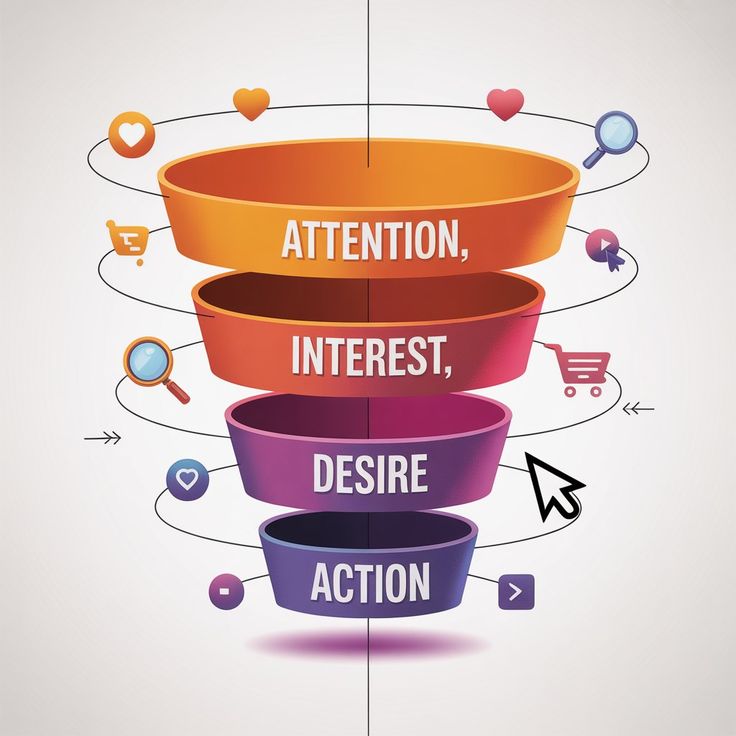
A simple way to understand Performance Marketing is through a conversion funnel.
Step 1: Attract the Right Audience
The first objective is to reach people who may be interested in your product or service.
This can happen through:
- Google Ads
- Social media advertising
- Search marketing
- Display advertising
- Affiliate marketing
- Email Marketing
- Retargeting campaigns
The platform you choose should depend on your audience and business goals.
For example, a person searching Google for a service may already have buying intent. Someone scrolling through Instagram may need more awareness before taking action.
This is why a strong Marketing Strategy starts with understanding customer behaviour.
Step 2: Get the User to Take Action
After seeing an advertisement, the user may:
- Click the ad
- Visit a landing page
- Read product information
- Submit a form
- Call the business
- Add a product to a cart
- Make a purchase
This desired action is called a conversion.
Google Ads defines conversions as valuable customer actions that businesses choose to track, such as purchases, sign-ups, phone calls, or other meaningful interactions.
The important point is that every business may define success differently.
For an e-commerce company, success may be a purchase.
For a B2B company, success may be a qualified lead.
For a service business, success may be a phone call or consultation booking.
Step 1: Define a Clear Campaign Goal
Every successful Performance Marketing campaign starts with a clear objective.
A weak objective might be:
“I want more traffic.”
A stronger objective would be:
“I want to generate 100 qualified leads in 30 days.”
The clearer the objective, the easier it becomes to measure campaign performance.
Common campaign goals include:
Lead Generation
The goal is to collect information from potential customers.
Examples:
- Contact form submissions
- Quote requests
- Consultation bookings
- Demo requests
For businesses focused on customer acquisition, a dedicated lead generation strategy can help connect marketing campaigns with qualified business opportunities.
Sales
The objective is to generate direct revenue.
This is common in:
- E-commerce businesses
- Online stores
- Subscription services
- Digital products
Brand Awareness
Some campaigns focus on reaching new audiences.
While awareness is less directly connected to immediate conversions, it can support long-term Performance Marketing by introducing people to a brand before they are ready to purchase.
Step 2: Identify and Target the Right Audience
One of the biggest mistakes businesses make is assuming that more people automatically means better results.
That is not always true.
Imagine two campaigns.
Campaign A
Reaches 100,000 random people.
Campaign B
Reaches 10,000 people actively interested in your product.
Campaign B may generate better business results despite having a smaller audience.
Performance Marketing focuses on relevance.
Marketers may use different targeting methods based on the platform, including:
- Location targeting
- Demographic targeting
- Interest targeting
- Behaviour-based targeting
- Search intent
- Remarketing audiences
- Lookalike audiences
The goal is to place the right message in front of the right person at the right time.
For businesses running paid campaigns, services such as social media advertising can help target audiences based on campaign objectives and customer behaviour.
Step 3: Create a Campaign That Encourages Action
Performance Marketing is highly data-driven, but creativity still matters.
An advertisement must give users a reason to take action.
A strong campaign usually includes:
- A clear message
- A relevant offer
- An engaging visual
- A strong headline
- A clear call-to-action
- A message matched to the audience
For example, compare these two advertisements.
Advertisement A
We provide digital marketing services.
Advertisement B
Get a customized digital marketing strategy designed to generate more qualified leads for your business.
The second message is more focused on the customer’s potential outcome.
A good Performance Marketing campaign does not only describe the business.
It explains why the audience should care.
Step 4: Send Traffic to a Relevant Landing Page
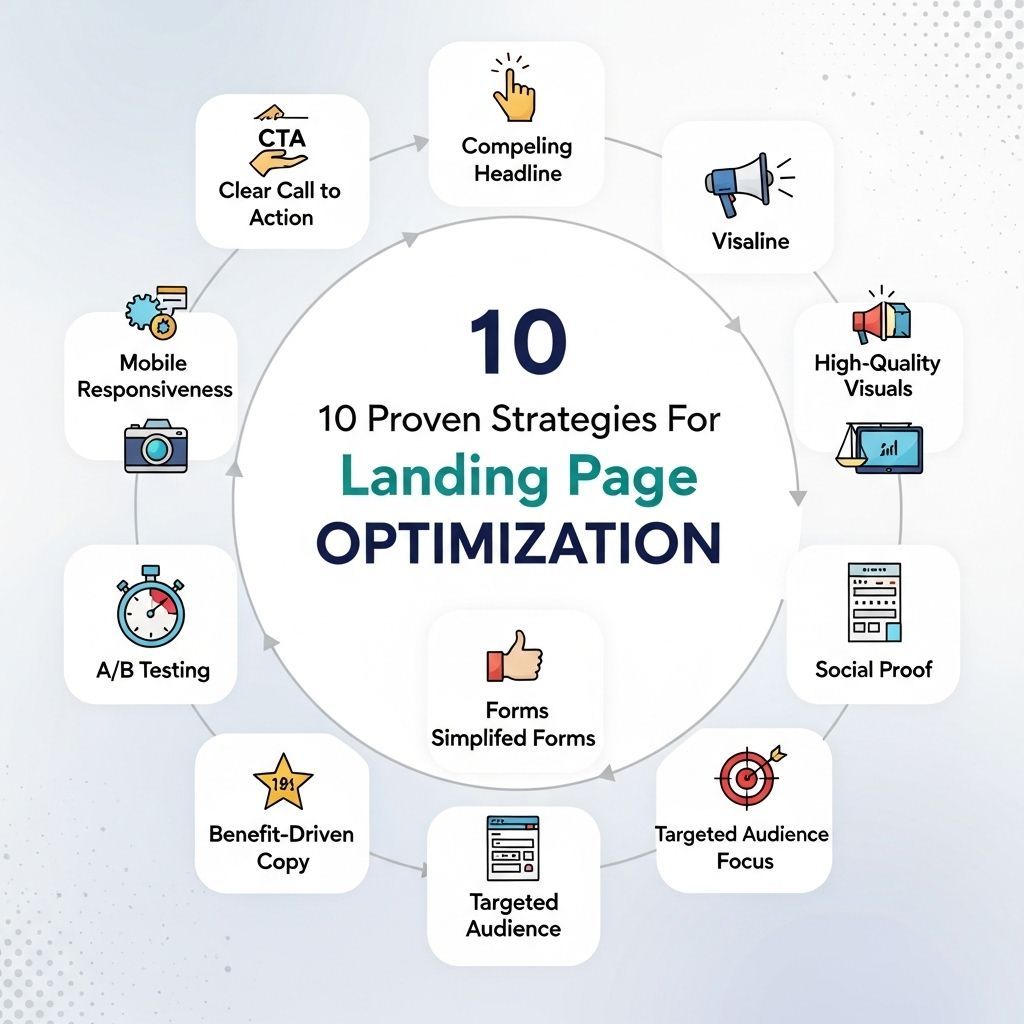
Getting a click is not the final goal.
In many cases, the real conversion happens after the user reaches your website.
This makes the landing page one of the most important parts of Performance Marketing.
A landing page should clearly communicate:
- What the business offers
- Why the offer is valuable
- What the user should do next
- Why the business can be trusted
For example, if an advertisement promotes a free consultation, the landing page should immediately explain:
- What the consultation includes
- Who it is for
- What problem it can solve
- How the user can book it
The page should also have a clear call-to-action.
Examples include:
- Get Started
- Request a Quote
- Book a Consultation
- Buy Now
- Download the Guide
A poorly designed website can reduce campaign performance even when advertisements generate quality traffic.
This is why conversion optimization should be considered part of a complete Digital Marketing system.
KRK Digitals focuses on improving digital visibility and measurable business growth through integrated strategies across SEO, PPC, content, social media, and conversion-focused marketing.
Step 5: Track Conversions
This is the foundation of Performance Marketing.
Without tracking, businesses may know how much they spent, but they may not know what results the money generated.
Conversion tracking can measure actions such as:
- Form submissions
- Purchases
- Phone calls
- Newsletter sign-ups
- Demo requests
- App downloads
The tracking process helps answer questions such as:
- Which campaign generated the most leads?
- Which keyword produced sales?
- Which audience converted best?
- Which advertisement had the highest ROI?
- Where are customers dropping off?
Google’s advertising tools allow businesses to measure conversion actions so campaigns can be evaluated and optimized based on valuable customer activity.
This leads to one of the most important principles of Performance Marketing:
If you cannot measure an important action, it becomes difficult to improve it.
Step 6: Analyze Campaign Performance
Once a campaign starts generating data, marketers need to analyze the results.
Some important metrics include:
Cost Per Click (CPC)
CPC shows how much a business pays for each advertisement click.
Formula:
CPC = Total Advertising Cost ÷ Total Clicks
However, a lower CPC does not always mean better performance.
Cheap clicks are useless if those visitors never become customers.
Cost Per Lead (CPL)
CPL measures the cost of generating a lead.
Formula:
CPL = Total Ad Spend ÷ Number of Leads
For example:
- Ad spend: ₹20,000
- Leads generated: 100
Cost Per Lead = ₹200
But marketers should go beyond the CPL.
A campaign generating 100 low-quality leads may be less valuable than one generating 30 highly qualified leads.
Conversion Rate
Conversion rate shows how many users complete a desired action.
For example:
- 1,000 visitors
- 50 conversions
Conversion rate = 5%
Improving conversion rates can significantly improve campaign profitability without necessarily increasing advertising budgets.
Cost Per Acquisition (CPA)
CPA measures how much it costs to acquire a customer or complete a valuable action.
For example:
- Ad spend: ₹50,000
- Customers acquired: 25
CPA = ₹2,000
Businesses should compare CPA with their customer value and profit margins.
Return on Ad Spend (ROAS)
ROAS measures the revenue generated from advertising.
For example:
- Ad spend: ₹10,000
- Revenue generated: ₹50,000
ROAS = 5x
However, a good ROAS depends on the business model, profit margins, and operational costs.
A business should not focus only on revenue.
Profitability matters too.
Performance Marketing Metrics at a Glance
| Metric | What It Measures | Why It Matters |
|---|---|---|
| CPC | Cost per click | Measures traffic cost |
| CTR | Click-through rate | Measures ad relevance |
| CPL | Cost per lead | Measures lead generation efficiency |
| CPA | Cost per acquisition | Measures customer acquisition cost |
| Conversion Rate | Percentage of users who convert | Measures funnel effectiveness |
| ROAS | Revenue from ad spend | Measures advertising return |
The best metric depends on the actual business goal.
For example, a lead generation company may focus more on qualified leads and CPA.
An e-commerce business may focus more heavily on ROAS and profitability.
Step 7: Optimize the Campaign
Performance Marketing is not a “set it and forget it” process.
Campaigns require regular analysis and improvement.
Marketers may test:
- Different audiences
- Ad headlines
- Images and videos
- Offers
- Landing pages
- Keywords
- Call-to-action buttons
- Ad placements
For example, a campaign may test two different headlines.
Version A
Get More Leads for Your Business
Version B
Generate Qualified Leads with a Data-Driven Digital Strategy
The campaign data can help identify which message performs better.
This process is often called testing and optimization.
The important lesson is that good marketing decisions should be based on evidence rather than assumptions.
How Email Marketing Supports Performance Marketing
Many people associate Performance Marketing only with paid advertising.
However, Email Marketing can play a major role in improving campaign results.
Imagine this customer journey:
Paid Advertisement → Landing Page → Lead Form → Email Follow-up → Sales Conversation → Customer
The advertisement may generate the lead.
But the email sequence may help build trust and move the customer closer to a purchase.
Email Marketing can support:
- Lead nurturing
- Welcome campaigns
- Promotional campaigns
- Abandoned cart recovery
- Customer retention
- Repeat purchases
The most effective Performance Marketing systems connect multiple channels instead of treating each channel separately.
For example, a visitor who downloads a guide can later receive useful emails, educational content, and relevant offers.
This creates a longer and more meaningful customer journey.
Performance Marketing vs Traditional Advertising
The biggest difference is measurement.
| Traditional Advertising | Performance Marketing |
|---|---|
| Focuses heavily on reach | Focuses on measurable outcomes |
| Difficult to track every result | Detailed campaign tracking |
| Limited optimization | Continuous optimization |
| Often broad targeting | Audience-based targeting |
| Results may take time to evaluate | Performance data available during campaigns |
Traditional marketing can still be valuable, especially for brand building.
However, Performance Marketing gives businesses more opportunities to understand how marketing investment connects with customer actions.
The strongest Marketing Strategy often combines both:
Brand Building + Measurable Performance
Common Mistakes Businesses Make in Performance Marketing
1. Focusing Only on Clicks
Clicks are not customers.
A campaign can receive thousands of clicks but generate very few sales.
The focus should remain on meaningful business outcomes.
2. Tracking Too Many Unimportant Metrics
Not every number deserves equal attention.
Businesses should prioritize metrics connected to actual goals.
For example:
- Revenue
- Qualified leads
- Customer acquisition
- Conversion rate
- ROI
3. Ignoring Landing Page Performance
A strong advertisement cannot always compensate for a weak website.
If users are interested enough to click but leave immediately, the landing page may be the problem.
Website content, speed, user experience, and call-to-action design all affect conversion performance.
4. Not Following Up With Leads
Generating leads is only one part of the process.
Businesses also need effective systems for:
- Fast follow-up
- Lead qualification
- Email nurturing
- Sales communication
Marketing and sales teams should work together.
5. Stopping Optimization Too Early
Campaign performance can change over time.
Audience behaviour, competition, seasonality, and advertising costs may all affect results.
Continuous monitoring is essential.
Performance Marketing and Digital Marketing Meaning
To understand the Digital Marketing Meaning, it helps to look at the bigger picture.
Digital Marketing includes multiple online strategies such as:
- Search Engine Optimization
- Social Media Marketing
- Content Marketing
- Paid Advertising
- Email Marketing
- Affiliate Marketing
- Conversion Rate Optimization
Performance Marketing is a results-focused approach within this broader Digital Marketing ecosystem.
For example:
- SEO can increase organic visibility.
- Content marketing can build trust.
- Social media can increase engagement.
- Paid advertising can generate immediate traffic.
- Email Marketing can nurture potential customers.
Performance Marketing connects these activities with measurable goals.
A well-planned Digital Marketing strategy can combine multiple channels to improve visibility, traffic, engagement, conversions, and business growth.
Similarly, SEO can support long-term organic growth by improving website visibility, content relevance, technical performance, and internal linking. Learn more about SEO services.
A Simple Performance Marketing Example
Let’s imagine a business selling online fitness programs.
Step 1: Set the Goal
Generate 50 new paid customers.
Step 2: Identify the Audience
Target people interested in:
- Fitness
- Weight loss
- Home workouts
- Healthy lifestyles
Step 3: Create the Advertisement
Offer:
Get a 7-Day Personalized Fitness Plan.
Step 4: Create a Landing Page
The landing page explains:
- Program benefits
- Customer testimonials
- Pricing
- Call-to-action
Step 5: Track Conversions
Track:
- Ad clicks
- Form submissions
- Purchases
Step 6: Analyze Data
Suppose:
- Campaign A generated 100 leads
- Campaign B generated 60 leads
But Campaign B generated more paying customers.
Campaign B may be more valuable despite generating fewer leads.
This is exactly why Performance Marketing focuses on meaningful outcomes rather than vanity metrics.
How to Build a Strong Performance Marketing Strategy
A successful Performance Marketing strategy should follow these principles.
Define Your Business Objective
Start with the result you want to achieve.
Understand Your Customer
Know who they are and what problem they want to solve.
Choose the Right Marketing Channels
Select platforms based on customer behaviour and campaign goals.
Create a Relevant Offer
Give users a strong reason to take action.
Build a Conversion-Focused Landing Page
Make the next step simple and clear.
Track Important Actions
Measure leads, sales, calls, purchases, or other valuable conversions.
Analyze Performance
Identify what is working and what needs improvement.
Optimize Continuously
Test, learn, and improve.
The Future of Performance Marketing
Performance Marketing is becoming increasingly connected with data, automation, artificial intelligence, and better measurement systems.
However, technology alone will not guarantee results.
The businesses that perform well will continue to focus on three important things:
1. Customer Understanding
Knowing what customers actually need.
2. Accurate Measurement
Tracking meaningful business outcomes.
3. Continuous Improvement
Using campaign data to make better decisions.
The future of Performance Marketing will not simply be about spending more on advertising.
It will be about creating smarter systems that connect customer behaviour with meaningful business results.
Final Thoughts
So, how does Performance Marketing work?
It works by creating a measurable connection between marketing investment and customer action.
The complete process involves:
Clear Goals → Right Audience → Strong Campaign → Optimized Landing Page → Conversion Tracking → Data Analysis → Continuous Optimization
The most successful businesses do not simply ask:
“How many people saw our advertisement?”
They ask:
“What business result did our marketing investment create?”
That is the real mindset behind Performance Marketing.
When combined with SEO, content, social media, Email Marketing, and a strong overall Digital Marketing strategy, Performance Marketing can help businesses make more informed decisions and focus their marketing efforts on measurable growth.
At KRK Digitals, businesses can explore integrated digital marketing solutions designed to improve visibility, attract the right audience, optimize campaigns, and support measurable business growth. Visit KRK Digitals to explore the available digital marketing solutions.
Ready to build a more results-focused Marketing Strategy? Explore KRK Digitals and start creating a digital growth approach designed around your business goals, audience, and measurable outcomes.