
You spent ₹50,000 on ads.
The campaign generated thousands of impressions, hundreds of clicks, and a dashboard full of numbers.
But then someone asks:
“How much revenue did those ads actually generate?”
And suddenly, things become uncomfortable.
This is the problem many brands face with paid advertising. They aren’t necessarily spending too little. They’re often spending without a clear connection between ad spend and business outcomes.
That’s where Performance Marketing comes in.
Performance Marketing changes the question from:
“How many people saw our advertisement?”
to:
“How many valuable actions and customers did our marketing generate?”
For brands competing across Google, Meta, social media, search engines, and other digital channels, this shift is becoming increasingly important.
At KRK Digital, the focus is not simply on generating traffic. The agency describes its approach around customized digital strategies, measurable results, PPC, SEO, social media, CRO, content and web development.
And that’s exactly how brands should start thinking about advertising:
Don’t spend more. Spend smarter.
What Is Performance Marketing?
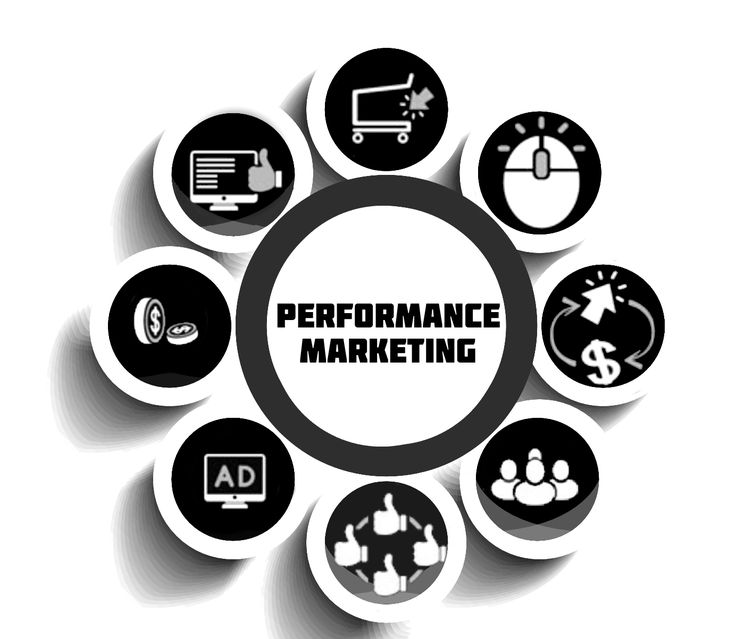
Performance Marketing is a results-driven approach to digital marketing where campaigns are planned, measured and optimized around specific business outcomes.
Those outcomes can include:
- Sales
- Qualified leads
- Website enquiries
- Product purchases
- Phone calls
- Demo bookings
- App installations
- Registrations
- Revenue
- Customer acquisition
Unlike advertising that focuses mainly on reach or visibility, performance marketing puts greater emphasis on measurable actions and business results.
For example, a brand might spend ₹1 lakh on advertising.
The important question isn’t simply how many people saw the ads.
The better questions are:
- How many people clicked?
- How many became leads?
- How many leads became customers?
- How much revenue did they generate?
- What did it cost to acquire each customer?
- Was the campaign profitable?
That’s the difference between running ads and building a performance marketing system.
Why Are Brands Burning Money on Ads?
Most brands don’t waste money because Google Ads or Meta Ads don’t work.
They waste money because one or more parts of the marketing funnel aren’t working properly.
Consider this:
Great advertisement + wrong audience = wasted budget
Great targeting + weak offer = wasted clicks
Great campaign + poor landing page = lost conversions
Great leads + slow sales follow-up = lost customers
Great sales + poor retention = weak lifetime value
This is why advertising shouldn’t be viewed as an isolated activity.
A successful customer journey usually looks more like:
Audience → Advertisement → Landing Page → Conversion → Sales → Customer → Retention
If your brand optimizes only the advertisement, you’re optimizing only one part of the system.
Performance Marketing vs Digital Marketing: What’s the Difference?
This is where understanding the Digital Marketing Meaning becomes important.
Digital Marketing is the broader process of promoting a business using digital channels.
It can include:
- Search Engine Optimization
- Google Ads
- PPC
- Social Media Marketing
- Social Media Advertising
- Content Marketing
- Email Marketing
- Local SEO
- Web Development
- Conversion Rate Optimization
- Mobile Marketing
Performance Marketing is more focused on measurable outcomes and continuous optimization.
Think of it this way:
Digital Marketing is the ecosystem. Performance Marketing is the performance-focused approach used to make that ecosystem produce measurable business results.
For example:
SEO can generate organic visibility.
PPC can capture high-intent searches.
Social Media Marketing can build awareness and engagement.
Content Marketing can educate potential customers.
Email Marketing can nurture prospects and existing customers.
CRO can improve the percentage of website visitors who convert.
The strongest Marketing Strategy doesn’t treat these channels as completely separate.
It connects them.
The Biggest Performance Marketing Mistake: Optimizing for Cheap Clicks
Let’s say you have two advertising campaigns.
| Metric | Campaign A | Campaign B |
|---|---|---|
| Ad Spend | ₹50,000 | ₹50,000 |
| Clicks | 5,000 | 2,000 |
| CPC | ₹10 | ₹25 |
| Leads | 100 | 60 |
| Customers | 5 | 20 |
| Revenue | ₹40,000 | ₹1,50,000 |
If you only look at CPC, Campaign A appears to be the winner.
But look at the revenue.
Campaign B generated significantly more business.
That’s why the cheapest click isn’t necessarily the most valuable click.
The same principle applies to leads.
A campaign generating leads at ₹200 each isn’t automatically better than one generating leads at ₹500 each.
What matters is what happens after the lead.
A ₹500 lead that becomes a ₹50,000 customer may be far more valuable than a ₹200 lead that never converts.
Current HubSpot marketing data reinforces this shift toward meaningful metrics: lead quality/MQLs, lead-to-customer conversion rate, ROI and customer acquisition cost are among the metrics marketers identify as especially important in 2026.
The Metrics That Actually Matter
A performance marketing dashboard shouldn’t simply look impressive.
It should help you make better business decisions.
| Metric | What It Tells You |
|---|---|
| CTR | Whether people find the advertisement relevant |
| CPC | What you’re paying for traffic |
| Conversion Rate | How effectively traffic produces actions |
| CPL | Cost of generating a lead |
| CAC | Cost of acquiring a customer |
| ROAS | Revenue generated against advertising spend |
| LTV | Long-term value of a customer |
| Profit | Whether your growth is financially sustainable |
The further you move down this list, the closer you get to actual business performance.
That’s why brands should gradually move from:
Clicks → Leads → Qualified Leads → Customers → Revenue → Profit
7 Reasons Your Advertising Budget Isn’t Delivering
1. You’re Targeting Too Broad an Audience
“Everyone who needs our product” isn’t a target audience.
A strong performance campaign starts by understanding:
- Who is most likely to buy?
- What problem are they trying to solve?
- What motivates them?
- What objections do they have?
- What alternatives are they considering?
- What makes them trust a brand?
The more clearly you understand your customer, the better your targeting and creative strategy become.
2. Your Advertisement and Landing Page Don’t Match
Imagine your ad says:
“Get 30% Off Your First Order.”
A user clicks.
But the landing page simply says:
“Welcome to Our Website.”
The user now has to search for the offer.
That’s friction.
A good landing page should continue the same conversation started by the advertisement.
The headline, offer, visual, copy and CTA should feel connected.
This is where Conversion Rate Optimization (CRO) becomes important.
KRK Digital describes CRO around optimizing website design, content and user experience to improve conversions and support business goals.
3. You’re Tracking the Wrong Conversion
Not every conversion has equal business value.
For example:
Page View ≠ Lead
Lead ≠ Qualified Lead
Qualified Lead ≠ Customer
Customer ≠ Profitable Customer
Google’s own documentation emphasizes that conversion goals should reflect the actions that matter to the business, and that conversion actions influence how automated bidding optimizes campaigns.
If you’re telling the advertising platform that every form submission is a valuable conversion, it may optimize toward generating more form submissions.
But what if half those forms are poor-quality enquiries?
Your campaign could become better at generating the wrong result.
Your tracking determines what your campaigns learn to optimize for.
4. You’re Ignoring Creative Fatigue
Even a winning advertisement can eventually lose performance.
People see it repeatedly.
The message becomes familiar.
Engagement declines.
Costs can rise.
That’s why creative testing should be continuous.
Test different:
- Headlines
- Hooks
- Images
- Videos
- Offers
- CTAs
- Customer problems
- Benefits
- Testimonials
- Product demonstrations
Instead of asking:
“Which ad looks better?”
Ask:
“Which message produces better business outcomes?”
That’s a much more useful question.
5. You’re Sending Paid Traffic to the Homepage
Your homepage is designed to introduce your entire business.
A paid campaign is usually built around a specific intent.
Someone searching:
“Best SEO agency for small business”
should ideally see a page specifically addressing SEO, not a generic homepage where they have to find the relevant service themselves.
Dedicated landing pages can create a much clearer path:
Search Intent → Advertisement → Relevant Page → CTA
The less friction between intent and action, the better your chances of conversion.
6. You’re Ignoring What Happens After the Lead
Suppose your campaign generates 100 leads.
But:
- 30 are never contacted.
- 20 are contacted too late.
- 15 aren’t properly qualified.
- 10 receive no follow-up.
- Sales has no visibility into the original campaign.
Your advertising may not be the biggest problem.
Your lead management process might be.
This is why performance marketing should connect with sales and CRM data.
Ask:
- Which campaigns produce qualified leads?
- Which campaigns produce customers?
- How quickly are leads contacted?
- Which audience generates the highest-value customers?
- Which keywords or creatives produce revenue?
Marketing shouldn’t stop when someone fills out a form.
7. You’re Scaling Before Finding a Winner

A common mistake is increasing the budget before understanding what actually works.
A better process is:
Test → Measure → Learn → Optimize → Scale
Find the combinations that work.
Then invest more.
This doesn’t mean never increase budgets.
It means scale based on evidence instead of assumptions.
Google Ads and Performance Marketing
Google’s advertising ecosystem has become increasingly automated.
For example, Performance Max is a goal-based campaign type that can access Google’s advertising inventory across Search, YouTube, Display, Discover, Gmail and Maps, while using Google’s AI to optimize toward specified conversion goals.
That changes the role of the marketer.
The question is no longer simply:
“Can I manually adjust this bid?”
The more important questions become:
- Are the conversion goals correct?
- Is the data reliable?
- Are the creative assets strong?
- Is the offer competitive?
- Are we giving the system meaningful signals?
- Are we optimizing for valuable customers?
Google specifically recommends aligning campaign objectives and conversion goals with the business outcome you’re trying to achieve.
In other words:
Automation doesn’t replace strategy.
It makes strategy more important.
Why Email Marketing Should Be Part of Your Performance Strategy
Here’s a situation many brands misunderstand.
A person clicks your advertisement.
They don’t buy.
Was the advertising money completely wasted?
Not necessarily.
If the person has voluntarily provided their contact information and you’ve obtained the appropriate permission to communicate with them, Email Marketing can help continue the relationship.
Depending on your business, this could include:
- Welcome emails
- Lead nurturing
- Abandoned-cart emails
- Product recommendations
- Educational sequences
- Special offers
- Re-engagement campaigns
- Post-purchase emails
- Cross-selling
- Customer retention
Current HubSpot research continues to show email as an important ROI-driving channel, while also emphasizing the need to connect email activity with actual revenue and not just opens or clicks.
This creates a more sophisticated funnel:
Advertisement → Website → Lead → Email Nurturing → Purchase → Repeat Purchase
Instead of:
Advertisement → Click → Buy or Lose
That’s a major difference.
Performance Marketing + SEO: Paid and Organic Should Work Together
Paid advertising can help you generate visibility quickly.
SEO can help you build long-term organic visibility.
The two channels don’t have to compete.
They can inform each other.
For example, your PPC data may reveal that customers repeatedly search for a particular problem.
That insight can influence your SEO and content strategy.
Similarly, pages performing well organically may reveal topics and messaging worth testing in paid campaigns.
KRK Digital’s SEO services focus on areas such as keyword research, technical optimization, content and internal linking to improve organic visibility.
This is why a strong digital marketing system should look at the complete customer journey rather than treating each channel as an isolated department.
CRO: The Missing Piece in Many Ad Campaigns
Imagine this:
You spend ₹1,00,000 on advertising.
The campaign brings 10,000 relevant visitors.
Your website converts at 1%.
That’s 100 conversions.
Now imagine improving the website conversion rate from 1% to 2%.
The same traffic can potentially produce 200 conversions.
You didn’t double the advertising budget.
You improved the efficiency of the traffic you already purchased.
That’s the power of Conversion Rate Optimization.
CRO can involve improving:
- Headlines
- Landing pages
- Forms
- CTAs
- Navigation
- Page speed
- Mobile experience
- Trust signals
- Product information
- Checkout experience
- User journey
This is why Performance Marketing and CRO should often be considered together.
Social Media Ads Are More Than “Boosting Posts”
Social media advertising can be powerful, but simply boosting a post isn’t the same as building a performance campaign.
A performance-focused social campaign should consider:
Audience → Objective → Creative → Offer → Landing Page → Conversion → Retargeting
Different users may also be at different stages of the buying journey.
Someone seeing your brand for the first time may need education.
Someone who visited your website yesterday may need proof.
Someone who added a product to their cart may need a reminder.
That means your creative and offer should reflect where the user is in the journey.
KRK Digital provides social media management and social advertising services, with an emphasis on content, engagement, performance monitoring and targeted campaigns.
A Smarter Performance Marketing Strategy
Before launching your next campaign, work through this framework.
Step 1: Define the Business Objective
Are you trying to generate:
- Sales?
- Qualified leads?
- Bookings?
- Calls?
- Revenue?
- New customers?
Be specific.
Step 2: Understand Your Customer
Define:
- Customer profile
- Pain points
- Buying triggers
- Objections
- Intent
- Preferred platforms
- Decision-making process
Step 3: Build the Right Offer
A great advertisement can’t rescue an unattractive offer.
Ask:
Why should someone choose you instead of your competitor?
Step 4: Match Message to Audience
Your ad should speak to a specific problem, desire, or opportunity.
Generic messaging usually creates generic results.
Step 5: Build a Conversion-Focused Landing Page
The landing page should:
- Match the ad
- Explain the benefit
- Establish trust
- Reduce friction
- Make the CTA clear
Step 6: Set Up Accurate Tracking
Track meaningful actions.
Don’t let vanity metrics become your definition of success.
Step 7: Connect Marketing and Sales
Follow the lead beyond the form submission.
Measure:
Lead → Qualified Lead → Opportunity → Customer → Revenue
Step 8: Nurture Potential Customers
Use appropriate email, remarketing and content strategies to continue the conversation.
Step 9: Analyze Profitability
Look beyond clicks and leads.
Ask:
“Is this campaign generating profitable growth?”
Step 10: Scale What Works
Once you have reliable evidence, increase investment carefully.
A Practical Performance Marketing Dashboard
A useful monthly report could look like this:
| Business Question | Metric |
|---|---|
| Are people responding to our ads? | CTR |
| Are we buying traffic efficiently? | CPC |
| Are visitors taking action? | Conversion Rate |
| How much does a lead cost? | CPL |
| Are leads becoming customers? | Lead-to-Customer Rate |
| How much does a customer cost? | CAC |
| How much revenue comes from advertising? | ROAS |
| Are customers valuable over time? | LTV |
| Is the campaign financially worthwhile? | Profit |
This is much more useful than sending a client a report saying:
“We generated 500,000 impressions this month.”
Impressions are useful.
But impressions don’t pay your bills.
Customers do.
The Future of Performance Marketing
Advertising platforms are becoming more automated.
Google’s Performance Max, for example, combines advertiser-provided assets, conversion goals and audience signals with Google’s AI-driven bidding and optimization systems.
That means the competitive advantage is gradually shifting.
It is less about who can manually adjust every campaign setting.
And more about who can provide better:
- Customer data
- Conversion signals
- Creative concepts
- Offers
- Landing pages
- Product information
- Sales feedback
- First-party audience data
- Business objectives
The brands that learn faster will have an advantage.
Why KRK Digital’s Integrated Approach Matters
Performance Marketing works best when paid campaigns aren’t operating in a vacuum.
KRK Digital’s current website highlights services across SEO, PPC, social media ads, SMM, content marketing, CRO, email marketing, web development, app development and local SEO.
That creates the opportunity to build a connected digital ecosystem.
For example:
SEO → captures organic demand
PPC → captures paid demand
Social Media → builds awareness and engagement
Content → educates and builds authority
CRO → improves conversion efficiency
Email Marketing → nurtures and retains customers
Web Development → supports the digital experience
Instead of asking which single channel is “best,” the smarter question is:
How can all of these channels work together to create profitable growth?
That’s the heart of a modern Marketing Strategy.
Performance Marketing Checklist
Before you spend another rupee on advertising, ask:
Strategy
- Is our business goal clearly defined?
- Do we know our ideal customer?
- Is our offer competitive?
Advertising
- Are we targeting the right audience?
- Are we testing multiple creative concepts?
- Are campaigns optimized for meaningful conversions?
Website
- Does our landing page match the advertisement?
- Is our CTA obvious?
- Is the website mobile-friendly?
- Is the page fast?
- Does the page establish trust?
Measurement
- Is conversion tracking accurate?
- Are we measuring qualified leads?
- Can we connect campaigns to customers?
- Are we tracking CAC and ROAS?
Retention
- Do we follow up quickly?
- Are we using Email Marketing appropriately?
- Do we have a strategy for repeat purchases?
If several answers are “no,” increasing your advertising budget probably isn’t the first thing you should do.
Fix the system first.
Final Thoughts: Stop Buying Clicks. Start Buying Outcomes.
Performance Marketing isn’t about spending less money.
It’s about wasting less money.
There’s a difference.
The objective isn’t necessarily to reduce your advertising budget from ₹1 lakh to ₹50,000.
The objective is to understand whether that ₹1 lakh is producing meaningful business results—and then identify where additional investment can create profitable growth.
The strongest brands don’t simply ask:
“How many people clicked?”
They ask:
“How many valuable customers did those clicks create?”
They don’t stop at:
“How many leads did we generate?”
They ask:
“How many qualified leads became customers?”
And they don’t celebrate:
“We got a great ROAS.”
until they understand what that return means for actual margins and profitability.
That’s what makes Performance Marketing powerful.
It turns advertising from an expense you hope will work into a system you can continuously measure, learn from and improve.
If your business is investing in Google Ads, PPC, Meta Ads or social media advertising but you’re not confident about where the money is going, it’s time to look beyond the advertisement.
It’s time to look at the entire system.
KRK Digital can help you build a data-driven digital marketing strategy focused on visibility, qualified leads, conversions and sustainable business growth.
Ready to Stop Burning Money on Ads?
Don’t increase your advertising budget blindly.
Build a strategy that makes every marketing rupee work harder.
Explore KRK Digital’s Digital Marketing Services and take the next step toward measurable growth.
Frequently Asked Questions
What is Performance Marketing?
Performance Marketing is a results-driven approach to digital marketing where campaigns are measured and optimized around specific business outcomes such as leads, sales, conversions, revenue and customer acquisition.
What is the difference between Performance Marketing and Digital Marketing?
Digital Marketing is the broader ecosystem that includes SEO, PPC, social media, content marketing, email marketing, websites and other digital channels. Performance Marketing focuses more heavily on measurable outcomes and continuous optimization.
Which Performance Marketing metrics should brands track?
Important metrics include conversion rate, CPL, CAC, ROAS, lead-to-customer rate, customer lifetime value and revenue. The right metrics depend on the business model and campaign objective.
Why are my ads getting clicks but no customers?
Common reasons include poor targeting, weak messaging, an unattractive offer, an unoptimized landing page, incorrect conversion tracking, poor lead quality or weak sales follow-up.
Is Email Marketing part of Performance Marketing?
Email Marketing can complement Performance Marketing by nurturing leads, recovering potential customers, increasing repeat purchases and improving customer lifetime value.
Should I invest more in Google Ads if my campaigns aren’t working?
Not automatically. First identify whether the problem is targeting, creative, offer, landing page, conversion tracking, lead quality or sales follow-up. Once you understand what works, scaling becomes much more effective.
Can SEO and Performance Marketing work together?
Yes. SEO can build long-term organic visibility while paid advertising can capture demand more immediately. Data from one channel can also inform strategy in the other.
Why is CRO important for Performance Marketing?
CRO helps increase the percentage of visitors who complete valuable actions. Improving conversion rates can allow businesses to generate more results from existing paid traffic without proportionally increasing ad spend.
About KRK Digital
KRK Digital provides digital marketing and web development solutions designed to help businesses strengthen their online presence and achieve measurable growth.
Its current service offering includes SEO, PPC management, social media advertising, SMM, content marketing, CRO, email marketing, web development, app development and local SEO.
The agency also states that it focuses on customized strategies, campaign measurement and business objectives rather than relying on one-size-fits-all marketing.
KRK Digital — Start Catching, Stop Chasing.