
If you’re planning to advertise your business online, one question usually comes before everything else:
“How much will Performance Marketing actually cost me?”
The answer isn’t simply ₹10,000, ₹50,000, or ₹1 lakh per month.
Your actual cost depends on how much you spend on advertising, which platforms you use, who manages the campaigns, how competitive your industry is, and—most importantly—what you expect those campaigns to achieve.
That is why two businesses can spend the same ₹1 lakh on advertising and get completely different results.
In this guide, we’ll break down Performance Marketing costs in India in 2026, including ad spend, agency fees, creative costs, tracking, pricing models, and realistic starting budgets.
If you’re looking for a practical approach to Performance Marketing with KRK Digitals, this guide will help you understand where your money actually goes.
What Is Performance Marketing?
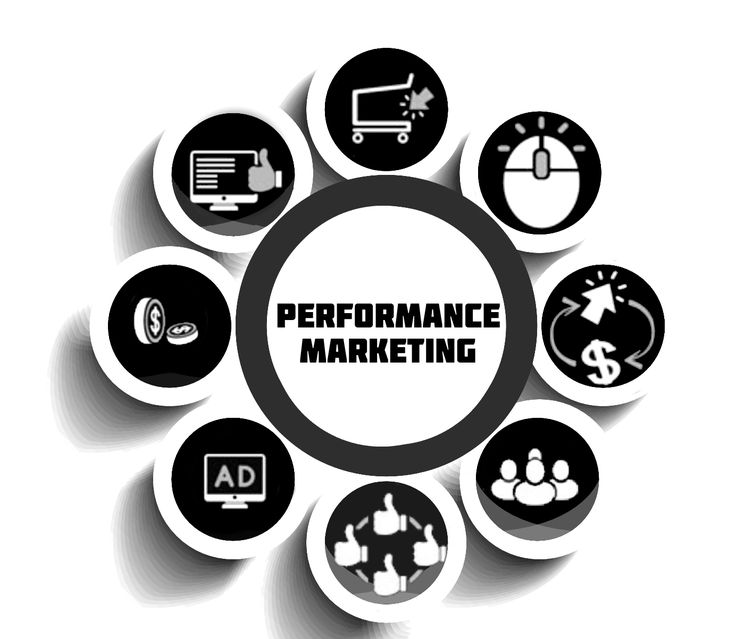
Performance Marketing is a digital advertising approach where campaigns are planned and optimized around measurable business actions.
Instead of focusing only on impressions or followers, the goal is usually something measurable such as:
- Leads
- Sales
- Website enquiries
- App installs
- Phone calls
- Registrations
- Purchases
- Revenue
For example, if you spend ₹50,000 on Google Ads and generate 100 qualified leads, your marketing team can calculate the cost per lead and evaluate whether those leads are commercially valuable.
Google’s own documentation explains that advertisers can use conversion measurement to identify valuable actions such as purchases, sign-ups and phone calls and use that information to understand campaign performance.
This is what makes Performance Marketing different from simply “running ads.”
How Much Does Performance Marketing Cost in India?
There are usually three major costs you need to consider:
- Ad/media spend
- Agency or management fee
- Creative, landing page and tracking costs
The important point is that these are not necessarily the same bill.
For example, an agency may charge ₹30,000 for campaign management while you separately spend ₹1,00,000 on Google and Meta advertising.
Current published Indian pricing examples show management fees ranging from roughly ₹15,000–₹40,000 for smaller accounts to ₹1 lakh+ for larger, multi-channel campaigns, while some specialist agencies publish packages starting around ₹18,000–₹45,000 per month. These are market examples rather than fixed industry standards.
Indicative Monthly Cost Structure
| Business Stage | Approx. Ad Spend | Possible Management Fee | Typical Focus |
|---|---|---|---|
| Small business | ₹30,000–₹1 lakh | ₹15,000–₹40,000 | Lead generation / local sales |
| Growing business | ₹1–₹5 lakh | ₹40,000–₹1 lakh | Google + Meta |
| Established brand | ₹5–₹25 lakh | ₹1–₹3 lakh+ | Multi-channel scaling |
| Enterprise | ₹25 lakh+ | Custom | Full-funnel performance |
These figures should be treated as indicative ranges, not guaranteed market prices. Scope matters more than the headline number.
1. Your Ad Budget: The Biggest Cost
The first component is your actual advertising budget.
This is the money that goes to advertising platforms such as:
- Google Ads
- Meta Ads
- YouTube Ads
- LinkedIn Ads
- Other paid media platforms
For example:
₹1,00,000 monthly ad budget = approximately ₹3,289 average daily budget.
Google explains that its advertising budgets are generally managed using an average daily budget, and a monthly planning figure can be estimated by multiplying the average daily budget by 30.4.
But there is an important lesson here:
Don’t choose your budget only because a competitor spends more.
Your budget should be connected to your economics.
Suppose your average customer generates ₹20,000 in revenue.
If your business can sustainably acquire that customer for ₹4,000, your advertising model may work.
If acquiring the same customer costs ₹15,000, increasing the budget may simply increase your losses.
That’s why Performance Marketing should begin with unit economics, not with an arbitrary advertising budget.
2. How Much Does a Performance Marketing Agency Charge?
Agency fees vary considerably across India.
Published 2026 pricing from Indian agencies shows examples ranging from approximately ₹15,000 per month for smaller packages to ₹1 lakh–₹3 lakh+ for larger accounts, while some agencies charge a percentage of advertising spend instead.
There are several common pricing models.
Fixed Monthly Retainer
You pay a fixed amount every month.
For example:
₹30,000/month management fee + ₹1,00,000 ad spend
This means your total planned monthly marketing outlay is approximately ₹1.3 lakh before any additional production or tax costs.
The advantage is predictability.
Percentage of Ad Spend
Some agencies charge a percentage of the advertising budget.
For example:
- ₹1 lakh ad spend × 10% = ₹10,000 fee
- ₹5 lakh ad spend × 10% = ₹50,000 fee
- ₹10 lakh ad spend × 10% = ₹1 lakh fee
Published Indian agency guides commonly describe percentage-based models in the broad range of 10%–20%, although actual arrangements vary by agency and account size.
Hybrid Pricing
A hybrid model combines a fixed management fee with another variable component.
For example:
₹40,000 monthly retainer + percentage of advertising spend
This can make sense when campaigns become larger and require additional account management, creative testing, analytics or multiple channels.
The important thing is to understand exactly what the fee covers.
3. What About Creative Costs?
This is one of the most overlooked parts of Performance Marketing.
You can have an excellent campaign structure, but if the creative is weak, people may simply scroll past the advertisement.
Depending on the business, you may need:
- Static ad designs
- Short-form videos
- Reels
- Product demonstrations
- UGC-style videos
- Ad copy
- Landing-page graphics
- Different creative variations for testing
Some agencies include creative production in their management package, while others charge separately.
So when comparing two quotes, don’t compare:
Agency A: ₹30,000
with
Agency B: ₹60,000
until you know exactly what each package includes.
The second agency may include creative production, landing-page recommendations, tracking and weekly optimization while the first only manages campaigns.
4. Landing Pages and Conversion Tracking
Another cost that businesses sometimes forget is the technology behind the campaigns.
Performance Marketing depends heavily on measurement.
You may need:
- Google Analytics 4
- Google Tag Manager
- Google Ads conversion tracking
- Meta Pixel
- CRM integration
- Call tracking
- Landing pages
- Form tracking
- E-commerce purchase tracking
Google Analytics allows important actions to be configured as key events and used to create conversions for Google Ads, helping advertisers connect campaign activity with meaningful business actions.
This matters because cheap clicks are not the same thing as profitable customers.
Imagine two campaigns:
| Campaign | Spend | Leads | Cost/Lead |
|---|---|---|---|
| A | ₹50,000 | 250 | ₹200 |
| B | ₹50,000 | 100 | ₹500 |
At first glance, Campaign A looks cheaper.
But suppose only 5 of its leads become customers while Campaign B generates 20 customers.
Suddenly, the cheaper lead isn’t necessarily the better business result.
That’s the difference between lead generation and performance measurement.
Performance Marketing vs Digital Marketing: What’s the Difference?
The terms are often used interchangeably, but they aren’t exactly the same.
Digital Marketing is a broader category covering activities such as:
- SEO
- Social media marketing
- Content marketing
- Email Marketing
- Paid advertising
- Influencer marketing
- Online reputation
- Analytics
Performance Marketing is more specifically focused on measurable outcomes from marketing campaigns.
If you’re researching the Digital Marketing Meaning, think of it as the larger ecosystem.
Performance Marketing is one important part of that ecosystem.
Does Email Marketing Cost Less?
Email Marketing can be relatively cost-efficient because you aren’t paying for every individual impression in the same way you do with paid advertising.
However, there can still be costs for:
- Email marketing software
- Database management
- Copywriting
- Automation
- Design
- CRM integration
- Lead nurturing
For a business generating leads through Google or Meta, Email Marketing can also become part of the conversion journey.
For example:
Ad → Landing Page → Lead → Email Follow-up → Sales Call → Customer
This is why Performance Marketing shouldn’t be viewed only as “running Google Ads.”
It is better understood as a measurable customer-acquisition system.
What Determines Your Performance Marketing Cost?
Your final cost can change significantly depending on several factors.
1. Industry
A competitive financial-services campaign may have very different advertising economics from a local service business.
2. Location
Advertising in one city can have different competition and audience costs compared with a pan-India campaign.
3. Customer Value
A business selling a ₹1,000 product has different economics from one selling a ₹1 lakh service.
4. Competition
The more advertisers competing for the same audience or search demand, the more challenging the auction can become.
5. Conversion Rate
A landing page converting 8% of visitors can produce very different economics from one converting 1%.
6. Tracking Quality
Poor tracking can make a campaign appear better or worse than it really is.
7. Creative Quality
The right creative can influence engagement, clicks and ultimately conversion efficiency.
A Simple Performance Marketing Budget Example
Let’s say you’re a small Indian business with a monthly marketing budget of ₹1,00,000.
One possible structure could look like this:
| Expense | Example Amount |
|---|---|
| Google/Meta Ad Spend | ₹70,000 |
| Campaign Management | ₹20,000 |
| Creative/Testing | ₹10,000 |
| Total | ₹1,00,000 |
This is only an example—not a universal formula.
Another business might allocate ₹90,000 to media and ₹10,000 to management.
The correct structure depends on the business model, margins, existing creative assets and campaign objectives.
How Much Should a Beginner Spend?
For a small business, starting with a controlled budget can be more useful than immediately spending several lakhs.
For example, you might test:
₹30,000–₹50,000/month
across a focused campaign.
The objective of the first phase isn’t necessarily to scale aggressively.
Instead, use it to answer questions such as:
- Which audience converts?
- Which offer gets attention?
- Which keywords produce qualified traffic?
- Which creative works?
- What is the cost per qualified lead?
- Which customers actually generate revenue?
Google itself recommends starting with a budget you’re comfortable with and adjusting based on campaign performance.
Once the numbers become reliable, you can consider scaling.
Don’t Confuse More Ad Spend With Better Marketing
This is probably the most important lesson in this entire article.
If a campaign isn’t working at ₹50,000, simply increasing it to ₹2 lakh doesn’t automatically solve the problem.
You may simply lose money faster.
A better Marketing Strateragy asks:
Where is the bottleneck?
Is it:
- Targeting?
- Offer?
- Ad creative?
- Landing page?
- Sales follow-up?
- Conversion tracking?
- Pricing?
- Product-market fit?
Sometimes the advertising campaign isn’t the real problem.
For example, if 100 people submit enquiries but only two receive a sales call, spending more money on advertisements may not fix the underlying business process.
What Should You Ask Before Hiring a Performance Marketing Agency?
Before signing a contract, ask these questions:
1. Is ad spend separate from your management fee?
It should be clearly defined.
2. Who owns the advertising account?
Ideally, the business should retain access and ownership.
3. What exactly is included?
Ask about:
- Campaign management
- Creative
- Landing pages
- Tracking
- Reporting
- Strategy
- Testing
4. What metrics will you report?
Look beyond impressions.
Important metrics can include:
- Cost per lead
- Cost per acquisition
- Conversion rate
- Revenue
- ROAS
- Qualified leads
- Customer acquisition cost
5. How will conversions be tracked?
Without reliable tracking, performance decisions become much harder.
The Real Cost of Performance Marketing
So, how much does Performance Marketing cost in India?
There isn’t one universal number.
For many small businesses, a practical starting structure may fall around:
₹30,000–₹1,00,000+ monthly ad spend
plus a management fee that may range from approximately:
₹15,000–₹40,000+ per month
depending on scope.
Growing businesses may spend several lakhs per month on media and pay substantially higher management fees as the number of channels, campaigns, creative requirements and analytical work increases. Current published Indian agency pricing illustrates this wide range.
The number that matters most, however, isn’t your monthly advertising budget.
It is:
How much does it cost you to acquire a customer—and how much profit does that customer generate?
That is the number that should guide your scaling decisions.
Final Thoughts
Performance Marketing isn’t about finding the cheapest advertising option.
It’s about building a system where your marketing investment can be measured, tested and improved.
A ₹50,000 campaign can be expensive if it generates no valuable customers.
A ₹5 lakh campaign can make business sense if it consistently produces profitable customers.
The goal should therefore be to start with a realistic budget, track the right conversions, understand your customer economics and scale only when the numbers support it.
If you’re exploring Performance Marketing for your business, visit KRK Digitals to learn more about building a measurable digital growth strategy.
Have a Performance Marketing budget in mind? Start by calculating your target customer acquisition cost—and then work backwards to determine how much you can realistically invest.
Frequently Asked Questions
How much does Performance Marketing cost in India?
There is no fixed price. Small businesses may start with ₹30,000–₹1 lakh or more in monthly ad spend, plus management fees. Larger campaigns can require several lakhs or more.
Is agency fee included in ad spend?
Usually, they are separate. Your advertising budget is paid to platforms such as Google or Meta, while the agency may charge a separate management fee.
Is Performance Marketing expensive for startups?
It doesn’t have to be, but the budget should match the startup’s economics. A focused campaign with proper conversion tracking can be more practical than spreading a small budget across many platforms.
What is the minimum budget for Performance Marketing?
There is no universal minimum. The appropriate amount depends on the industry, customer value, target audience, conversion rate and platform. Google recommends choosing a budget and bid amount that you’re comfortable with and adjusting based on performance.
What is the difference between Performance Marketing and Digital Marketing?
Digital Marketing is the broader discipline covering SEO, social media, content, Email Marketing, paid advertising and other online activities. Performance Marketing focuses particularly on measurable business outcomes.
How do I know whether my campaign is profitable?
Track the complete journey from advertising spend to qualified lead or purchase and, where possible, connect those conversions with actual revenue. Google Analytics and Google Ads provide tools for conversion measurement and cross-channel analysis.