
Imagine someone searches Google for “best digital marketing agency in India.”
They already have a problem. They are actively looking for a solution.
Now imagine your business appears at exactly that moment.
That is where Google Ads and Performance Marketing can work together.
Google Ads can help you reach people when they are searching, while Performance Marketing provides the broader framework for deciding who to target, what to offer, how to measure results, and when to scale or change the campaign.
But there is an important distinction:
Google Ads is a platform. Performance Marketing is a strategy and measurement approach.
Understanding that difference can completely change how you manage your advertising budget.
In this guide, we’ll explain how Google Ads fits into Performance Marketing, how campaigns are measured, which metrics matter, and how businesses can turn clicks into measurable business results.
If you’re exploring a data-driven approach to online growth, you can also explore KRK Digitals for Performance Marketing and Digital Marketing services.
What Is Google Ads?
Google Ads is Google’s advertising platform that allows businesses to promote products and services across Google’s advertising ecosystem.
Depending on the campaign type, advertisements can appear across places such as:
- Google Search
- YouTube
- Google Maps
- Display Network
- Gmail
- Discover
- Shopping
Google’s Performance Max campaigns, for example, can access multiple Google inventory channels from a single campaign, including Search, YouTube, Display, Discover, Gmail and Maps.
But simply appearing on Google isn’t the same as generating business.
That’s where Performance Marketing comes in.
What Is Performance Marketing?
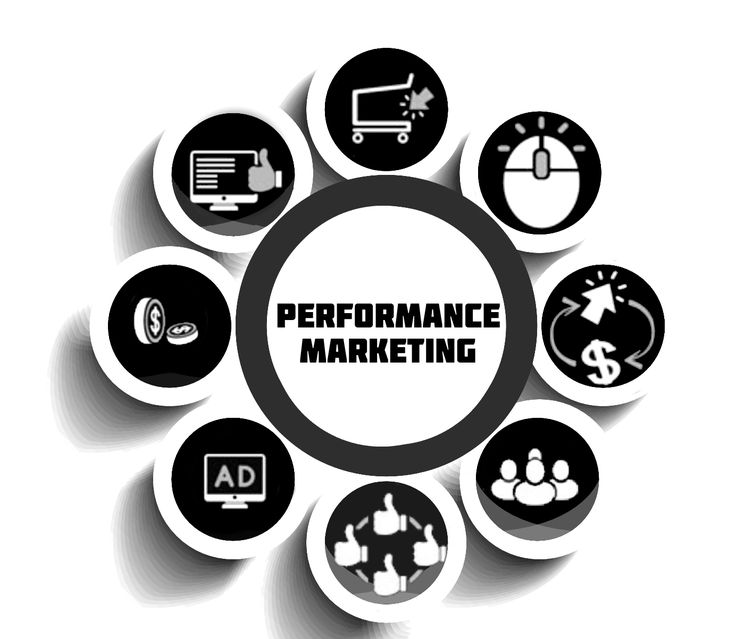
Performance Marketing focuses on measurable business outcomes.
Instead of asking only:
“How many people saw my advertisement?”
you start asking:
- How many people clicked?
- How many became leads?
- How many leads were qualified?
- How many purchased?
- What was the cost per acquisition?
- How much revenue did the campaign generate?
- What was the return on advertising spend?
This is why Google Ads can be such an important part of a Performance Marketing strategy.
Google provides the advertising infrastructure.
Performance Marketing provides the framework for turning that advertising activity into measurable business decisions.
Google Ads vs Performance Marketing
These two terms are related, but they aren’t interchangeable.
| Google Ads | Performance Marketing |
|---|---|
| Advertising platform | Marketing approach |
| Provides paid traffic | Focuses on measurable outcomes |
| Includes Search, YouTube, Display, etc. | Can use multiple channels |
| Primarily handles media buying | Covers strategy, measurement and optimization |
| Campaign-level tool | Broader customer-acquisition framework |
| You pay the advertising platform | You evaluate the business return |
For example, Google Ads could bring 500 visitors to your website.
Performance Marketing asks what happened after those 500 visitors arrived.
If 30 submitted enquiries and 8 became customers, those numbers become part of your performance analysis.
How Google Ads Fits Into Performance Marketing
Think of the relationship like this:
Business Goal → Strategy → Google Ads → Landing Page → Conversion → Measurement → Optimization → Scaling
Each stage matters.
Step 1: Define the Business Goal
Before creating a campaign, decide what you’re actually trying to achieve.
It could be:
- Leads
- Online sales
- Phone calls
- App installs
- Registrations
- Store visits
- Revenue
Google’s Smart Bidding options are designed around goals such as maximizing conversions, Target CPA, maximizing conversion value and Target ROAS.
The campaign objective should therefore connect to a real business outcome.
Step 2: Choose the Right Google Ads Campaign
Different businesses can use different Google Ads campaign types.
Search Ads
Search campaigns are particularly useful when people are actively searching for a product or service.
For example:
“performance marketing agency in Delhi”
A user searching this term already demonstrates some level of intent.
Performance Max
Performance Max allows advertisers to access multiple Google channels through one campaign and uses Google’s AI and Smart Bidding to optimize toward selected goals.
YouTube and Video
Video advertising can help businesses introduce products, demonstrate services and reach audiences earlier in the customer journey.
Shopping
E-commerce businesses can use Shopping campaigns to promote products directly within Google’s shopping ecosystem.
The correct campaign isn’t necessarily the one with the most features.
It’s the one that fits the customer journey and business objective.
Step 3: Build the Right Targeting Strategy
This is where Performance Marketing becomes more strategic.
For Search campaigns, you might organize keywords around different levels of intent.
For example:
Informational
“what is performance marketing”
Commercial investigation
“best performance marketing agency”
Transactional
“performance marketing agency hire”
These searches don’t necessarily have the same value.
Someone searching for a definition may simply be researching.
Someone searching for an agency may be much closer to contacting a provider.
That doesn’t mean informational keywords are useless.
They can help build awareness and support the customer journey.
But your campaign structure and budget should recognize the difference in intent.
Step 4: Create Landing Pages That Match the Ad
Getting the click is only half the job.
Suppose your advertisement says:
“Performance Marketing Services for Growing Businesses”
but the visitor lands on a generic homepage with no clear explanation of the service.
The user now has to figure everything out themselves.
That’s unnecessary friction.
A strong Performance Marketing campaign connects:
Search Query → Ad → Landing Page → Offer → CTA
The message should feel consistent throughout the journey.
For example:
Search: Performance Marketing Agency
↓
Ad: Performance Marketing for Measurable Growth
↓
Landing Page: Services + Process + Proof
↓
CTA: Request a Strategy Consultation
That consistency can make the customer journey easier to understand.
Step 5: Track Conversions
This is arguably the most important connection between Google Ads and Performance Marketing.
Without reliable conversion tracking, you’re primarily measuring traffic.
With conversion tracking, you can begin measuring business actions.
Google states that Smart Bidding requires conversion tracking and uses conversion data to optimize bids toward conversion or conversion value goals.
Depending on the business, conversions might include:
- Form submissions
- Phone calls
- Purchases
- WhatsApp enquiries
- Sign-ups
- Bookings
- App installations
But there is another important consideration:
Not every conversion has equal value.
A ₹10,000 purchase and a ₹1,00,000 purchase shouldn’t necessarily be treated identically.
That’s where conversion value becomes useful.
Google’s value-based bidding allows advertisers to optimize toward conversion value rather than simply counting conversions.
The Numbers That Actually Matter
A Performance Marketing campaign should go beyond clicks and impressions.
Here are some useful metrics:
| Metric | What It Tells You |
|---|---|
| Impressions | How often ads were shown |
| CTR | How frequently users clicked |
| CPC | Average cost per click |
| Conversion Rate | Percentage of visitors who converted |
| CPL | Cost per lead |
| CPA | Cost per acquisition |
| ROAS | Revenue generated per advertising rupee |
| Revenue | Actual sales generated |
| CAC | Customer acquisition cost |
For example:
Suppose you spend ₹50,000 on Google Ads.
You generate:
- 250 leads
- 50 qualified leads
- 10 customers
- ₹2,00,000 revenue
Your analysis shouldn’t stop at:
“We generated 250 leads.”
You should ask:
How much did those customers cost, and how much revenue did they generate?
That’s Performance Marketing thinking.
Google Ads + Performance Marketing Example
Let’s take a simple example.
Imagine an Indian service business spends:
₹1,00,000 on Google Ads
The campaign generates:
200 leads
So:
Cost per lead = ₹500
That sounds good initially.
But after sales follow-up, only 20 leads become customers.
Therefore:
Customer acquisition cost = ₹5,000
Now imagine the average customer generates ₹25,000 in revenue.
The business can evaluate whether spending ₹5,000 to acquire a ₹25,000 customer makes commercial sense based on its margins and other costs.
This is why lead cost alone doesn’t tell the complete story.
Where Smart Bidding Comes In
Google’s Smart Bidding uses AI to optimize bids at auction time based on conversion or conversion-value goals.
Current Google documentation describes strategies including:
- Maximize conversions
- Target CPA
- Maximize conversion value
- Target ROAS
Google also explains that Smart Bidding evaluates contextual signals such as device, location, time and other signals when determining bids.
But automation doesn’t eliminate the need for strategy.
It makes good data and good conversion tracking even more important.
If you tell the system that every form submission is equally valuable when some submissions are junk leads, the optimization signal can become less useful.
Google Ads Isn’t the Entire Performance Marketing Strategy
This is one of the biggest misconceptions.
A business can run excellent Google Ads and still have a weak Performance Marketing system.
Why?
Because performance depends on more than advertising.
Consider this journey:
Google Search
↓
Advertisement
↓
Landing Page
↓
Lead Form
↓
Sales Team
↓
Follow-up
↓
Customer
If the sales team never follows up with the lead, increasing your Google Ads budget may not solve the problem.
Performance Marketing therefore requires collaboration between:
- Advertising
- Website
- Analytics
- Sales
- Creative
- Customer relationship management
- Retargeting
- Email Marketing
The Role of Email Marketing
Not every visitor is ready to buy immediately.
Someone might download a guide today and become a customer three weeks later.
This is where Email Marketing can support the wider Performance Marketing system.
A possible customer journey could look like:
Google Ad → Landing Page → Lead → Email Follow-up → Sales Call → Purchase
This means Google Ads can become the first step rather than the entire customer journey.
The same principle applies to remarketing and other Digital Marketing channels.
Google Ads and Digital Marketing: How They Connect
If you’re trying to understand the Digital Marketing Meaning, think of Digital Marketing as the larger ecosystem.
It can include:
- SEO
- Google Ads
- Social Media Marketing
- Content Marketing
- Email Marketing
- Influencer Marketing
- Online reputation
- Analytics
Google Ads is therefore one component.
Performance Marketing sits across these activities when the focus is on measurable outcomes and optimization.
For example:
SEO brings organic traffic
Google Ads captures paid search demand
Email Marketing nurtures leads
Analytics measures customer behavior
=
A more complete Digital Marketing system
Common Google Ads + Performance Marketing Mistakes
1. Optimizing Only for Clicks
More clicks don’t automatically mean more customers.
2. Tracking the Wrong Conversion
If low-quality actions are counted as successful conversions, campaign optimization can move in the wrong direction.
3. Sending Every Ad to the Homepage
Different campaigns often deserve different landing experiences.
4. Changing Campaigns Too Frequently
Performance data needs enough time and volume to become useful.
5. Ignoring Sales Data
A Google Ads dashboard might report leads, but your CRM or sales team may reveal which leads actually became customers.
6. Scaling Before Understanding Economics
Increasing budget before understanding acquisition costs can simply increase expenditure without improving profitability.
A Practical Google Ads Performance Marketing Framework
If you’re starting from scratch, use this simple framework:
1. Define the objective
Lead generation, sales, revenue or another measurable outcome.
2. Understand your customer
Identify search intent, problems, needs and buying triggers.
3. Build campaigns around intent
Separate important themes rather than putting everything into one campaign.
4. Create relevant landing pages
Match the advertisement to the page experience.
5. Set up conversion tracking
Measure the actions that actually matter.
6. Choose an appropriate bidding strategy
Align bidding with your objective and available conversion data.
7. Test
Test:
- Keywords
- Ads
- Landing pages
- Offers
- Audiences
- Creative
8. Analyze business results
Don’t stop at CPC or CTR.
Look at qualified leads, customers, revenue, CAC and ROAS where appropriate.
9. Scale carefully
Increase investment when the economics support it.
The Bigger Picture
Google Ads can help you buy attention at the moment of intent.
Performance Marketing helps you determine whether that attention is creating business value.
That’s the real relationship.
You don’t need to think of Google Ads as:
“I pay Google → Google gives me clicks.”
A stronger way to think about it is:
Business Goal → Customer Intent → Google Ads → Conversion → Data → Optimization → Business Growth
When these pieces work together, advertising becomes more than traffic generation.
It becomes a measurable acquisition system.
Final Thoughts
Google Ads and Performance Marketing are not competitors or two separate strategies.
Google Ads can be one of the most important channels inside a Performance Marketing strategy.
But the platform itself doesn’t determine success.
The bigger picture includes:
- The right audience
- The right search intent
- The right offer
- Relevant advertisements
- Strong landing pages
- Accurate conversion tracking
- Appropriate bidding
- Sales follow-up
- Continuous testing
- Business-level measurement
And that’s why the question shouldn’t only be:
“How much should I spend on Google Ads?”
A better question is:
“What business result can my advertising investment realistically produce?”
If you’re looking to build a measurable advertising strategy rather than simply generate clicks, explore KRK Digitals and consider how Google Ads can fit into your broader Performance Marketing strategy.
Start with the goal. Measure the right action. Learn from the data. Then scale what works.
FAQs
Is Google Ads the same as Performance Marketing?
No. Google Ads is an advertising platform, while Performance Marketing is a broader approach focused on measurable outcomes such as leads, sales, customers and revenue.
Is Google Ads good for Performance Marketing?
Google Ads can be used effectively within a Performance Marketing strategy because it provides campaign, conversion and bidding tools that support measurable objectives. Google’s Smart Bidding can optimize toward conversions or conversion value.
What should I track in Google Ads?
Depending on your objective, useful metrics can include conversions, conversion rate, cost per conversion, conversion value, CPA, ROAS, qualified leads and revenue.
Should I use Search Ads or Performance Max?
It depends on your business objective, available conversion data, products/services and customer journey. Performance Max can access multiple Google channels, while Search campaigns provide keyword-based targeting.
Can Google Ads generate sales without Performance Marketing?
Google Ads can generate clicks, leads and sales, but a Performance Marketing approach adds the broader measurement, testing and optimization framework needed to evaluate business outcomes.