Imagine running a digital advertising campaign where the system can analyze thousands of signals, adjust bids in real time, create different ad variations, identify potential customers, and help marketers understand which actions are most valuable.
That is no longer just a futuristic idea.
AI is becoming part of everyday Performance Marketing in 2026.
Google is expanding AI-powered advertising capabilities across Search, YouTube, Shopping and other surfaces, while marketing teams are increasingly using AI for content creation, personalization, campaign optimization and analysis. Google has also introduced newer AI-powered capabilities such as AI Max for Search and Gemini-powered advertising tools.
But there is an important distinction:
AI can automate many marketing tasks, but it does not eliminate the need for strategy.
In fact, as more advertising becomes automated, understanding data, customer intent, creative quality and business economics becomes even more important.
Let’s explore how AI is changing Performance Marketing in 2026 and what businesses should actually do about it.
What Is Performance Marketing?
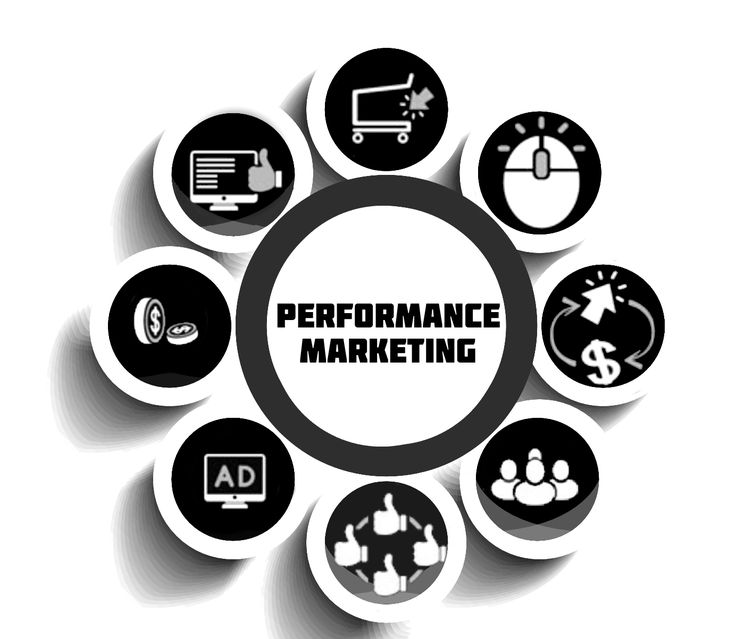
Before understanding the impact of AI, let’s clarify the Digital Marketing Meaning of Performance Marketing.
Performance Marketing is a results-focused approach to digital advertising where campaigns are measured against specific business outcomes.
These outcomes can include:
- Leads
- Sales
- Purchases
- App installations
- Phone calls
- Registrations
- Qualified enquiries
- Revenue
- Customer acquisition
Instead of asking only:
“How many people saw my advertisement?”
Performance Marketing asks:
“What did the marketing investment actually produce?”
For example:
₹50,000 ad spend → 100 leads → 20 customers → ₹3 lakh revenue
Now the business can evaluate the relationship between marketing cost and business results.
This is why Performance Marketing has become an important part of modern Digital Marketing strategies.
You can also read KRK Digitals’ detailed guide on how Performance Marketing works for a deeper explanation of tracking, optimization and conversion measurement.
How Is AI Changing Performance Marketing in 2026?
AI is affecting almost every stage of the marketing funnel.
Traditional workflow
Research → Create → Launch → Analyze → Optimize
AI-assisted workflow
Data → AI insights → Creative variations → Automated targeting → Real-time optimization → Human decisions
The marketer’s role is gradually shifting from manually controlling every campaign setting toward setting objectives, providing quality inputs, monitoring data and making strategic decisions.
Here are the biggest changes.
1. AI Is Automating Ad Bidding
One of the clearest examples is automated bidding.
Google Ads Smart Bidding uses Google AI to optimize bids at auction time based on the likelihood of achieving conversions or conversion value. Its strategies include Maximize Conversions, Target CPA, Maximize Conversion Value and Target ROAS.
This means marketers don’t necessarily need to manually decide how much to bid for every individual auction.
AI can evaluate signals such as:
- Device
- Location
- Time
- Context
- User behavior
- Historical conversion patterns
- Other auction-level signals
and adjust bids accordingly.
What does this mean for Performance Marketing?
The focus moves from:
“What bid should I manually set?”
to:
“Am I giving the system the correct conversion data and business goal?”
That’s a major strategic change.
2. AI Is Improving Search Campaigns
Search behavior is becoming more complicated.
People aren’t always searching with short keywords anymore.
Instead of:
performance marketing agency
someone might search:
How can a small business reduce customer acquisition costs using Google Ads?
AI-powered advertising systems are designed to understand broader intent and context.
Google’s AI Max for Search is an example of this shift. Google says AI Max combines advertiser inputs such as ad and website content with broader intent signals to help identify additional relevant search opportunities.
Google announced in 2026 that AI Max is moving out of beta, with eligible legacy Search campaigns beginning an automatic transition later in 2026 and broader DSA changes continuing into 2027.
The important lesson
Keywords still matter.
But understanding customer intent matters more than simply collecting keywords.
3. AI Is Changing Ad Creative
Creating ten versions of an advertisement used to require considerable manual work.
AI can now help marketers generate variations of:
- Headlines
- Descriptions
- Social media copy
- Product descriptions
- Video concepts
- Images
- Calls-to-action
- Landing-page copy
- Email campaigns
Google’s 2026 marketing announcements include AI-powered creative capabilities through Asset Studio, designed to help advertisers create and refine marketing assets using natural-language instructions.
This makes creative testing faster.
For example:
| Creative Element | Version A | Version B |
|---|---|---|
| Headline | Get More Leads | Reduce Your Cost Per Lead |
| CTA | Get Started | Request a Free Consultation |
| Message | Grow Your Business | Generate Qualified Customers |
| Visual | Dashboard | Customer Journey |
Instead of betting everything on one creative, marketers can test multiple variations.
However, more variations don’t automatically mean better performance.
The quality of the offer, audience understanding and messaging still matter.
4. AI Is Making Personalization Easier
One of the biggest opportunities for AI in Performance Marketing is personalization.
Imagine two customers:
Customer A:
Searching for marketing services for a startup.
Customer B:
Looking for an agency to generate leads for an established business.
Showing both customers exactly the same message may not be ideal.
AI can help marketers create different experiences based on:
- Search intent
- Audience characteristics
- Previous interactions
- Website behavior
- Product interests
- Customer stage
- Campaign data
HubSpot’s 2026 State of Marketing report found that using AI for personalized content was the most frequently identified marketing trend in its survey, while 93.2% of respondents said personalized or segmented experiences had generated more leads and purchases.
The practical opportunity is simple:
Use AI to scale personalization without making the customer experience feel robotic.
5. AI Is Changing Performance Marketing Analytics
Previously, marketers could spend hours looking through campaign dashboards.
Now AI can help identify patterns within large amounts of marketing data.
For example:
Campaign A
- CPC: ₹30
- Leads: 80
- Customers: 5
Campaign B
- CPC: ₹40
- Leads: 50
- Customers: 15
Looking only at CPC might make Campaign A appear cheaper.
But looking at actual customers tells a different story.
This is why Performance Marketing should not optimize only for:
- Clicks
- Impressions
- Traffic
- Engagement
Instead, businesses should connect advertising data with actual business outcomes.
Important metrics include:
| Metric | What It Tells You |
|---|---|
| CTR | How often people click |
| CPC | Cost of traffic |
| Conversion Rate | Percentage taking desired action |
| CPL | Cost per lead |
| CPA | Cost per acquisition |
| CAC | Customer acquisition cost |
| ROAS | Revenue generated relative to ad spend |
| LTV | Customer value over time |
AI can help analyze these relationships faster, but marketers still need to decide which metrics actually matter to the business.
6. AI Is Connecting Google Ads With the Wider Marketing Funnel
Performance Marketing isn’t just about advertising.
Consider this customer journey:
Google Ad → Landing Page → Lead Form → Email Marketing → Sales Call → Customer
The advertisement may generate the initial lead.
But what happens afterward can significantly affect the final result.
This is where Email Marketing can become important.
For example:
Day 1
Customer downloads a guide.
Day 2
Educational email is sent.
Day 4
Case study is shared.
Day 7
Product/service offer is presented.
Day 10
Follow-up email is sent.
AI can help marketers personalize parts of this journey while maintaining measurable goals.
The bigger idea is:
Performance Marketing should measure the complete customer journey, not just the first click.
7. AI Is Making Performance Max More Automated
Google’s Performance Max campaigns already use AI and automation across Google’s advertising inventory.
The broader Google ecosystem includes surfaces such as:
- Search
- YouTube
- Display
- Discover
- Gmail
- Maps
This allows advertisers to optimize campaigns toward defined goals across multiple Google surfaces.
Google’s 2026 updates also show the wider direction of advertising: AI is increasingly being used for discovery, creative production, campaign optimization and measurement.
This means campaign management is becoming less about manually controlling every placement and more about:
Goals + Data + Creative + Conversion Signals + Human Oversight
AI Does Not Replace Marketing Strategy
This is probably the most important point of the entire article.
AI can:
- Analyze data
- Generate content
- Create variations
- Automate bids
- Identify patterns
- Assist with targeting
- Speed up research
But AI does not automatically know:
- Why customers should choose your business
- Whether your pricing is competitive
- Whether your offer is attractive
- What makes your brand different
- Which customers are profitable
- Whether your sales team is converting leads
- What your long-term business objective should be
That’s why Marketing Strategy remains important.
The better approach is:
Human Strategy + AI Automation
Not:
AI Instead of Strategy
HubSpot’s 2026 research similarly reports that most marketers surveyed see AI working alongside marketers rather than replacing them, while emphasizing the continuing importance of human-led creativity and judgment.
What AI Means for Performance Marketing in India
The change is particularly relevant for Indian businesses because the digital advertising environment is becoming increasingly automated and competitive.
Google’s 2026 India marketing announcements highlighted Gemini-powered advertising tools, AI Max for Search, AI-powered creative tools and new measurement capabilities for Indian advertisers.
For a business in India, this means a Performance Marketing strategy can increasingly combine:
Google Ads + AI + Landing Pages + CRM + Email Marketing + Analytics + Sales Data
For example:
Ad → Lead → CRM → Email → Sales → Revenue → AI-assisted analysis → Campaign optimization
That is much more powerful than simply measuring clicks.
8. The New Performance Marketing Skill Set
As AI handles more repetitive tasks, marketers need to develop stronger strategic skills.
Old focus
- Manual bidding
- Keyword management
- Basic reporting
- Manual creative production
Emerging focus
- Customer psychology
- Data interpretation
- Conversion tracking
- Offer development
- Creative strategy
- Funnel design
- AI prompting
- Experimentation
- Customer lifetime value
- Business analytics
The marketer’s job isn’t disappearing.
It’s becoming more strategic.
9. Common AI Performance Marketing Mistakes
AI can make marketing faster, but it can also make mistakes faster.
Mistake 1: Trusting automation blindly
Automated campaigns still need monitoring.
Mistake 2: Feeding AI poor data
If conversion tracking is wrong, optimization can move in the wrong direction.
Mistake 3: Creating generic AI content
AI-generated content without brand personality can become repetitive.
Mistake 4: Optimizing for cheap leads
A low-cost lead isn’t necessarily a valuable customer.
Mistake 5: Ignoring sales data
Marketing teams should understand what happens after a lead enters the CRM.
Mistake 6: Changing campaigns constantly
AI systems need meaningful data and stable objectives to optimize effectively.
A Practical AI-Powered Performance Marketing Strategy for 2026
Businesses can use a simple framework.
Step 1: Define the business objective
Choose the real goal:
Leads / Sales / Revenue / Profit / Customer Acquisition
Step 2: Set up reliable tracking
Track meaningful conversion actions.
Step 3: Understand your audience
Use customer research and existing data.
Step 4: Build the campaign
Use the appropriate channels and campaign types.
Step 5: Use AI for scale
Use AI for:
- Bid optimization
- Creative variations
- Audience signals
- Data analysis
- Personalization
Step 6: Keep human oversight
Review:
- Lead quality
- Sales
- Revenue
- Customer feedback
- Brand consistency
Step 7: Optimize the entire funnel
Don’t stop at the advertisement.
Improve:
Ad → Landing Page → Lead → Follow-up → Sale → Retention
Step 8: Scale what actually works
Increase investment only after understanding the economics of the campaign.
AI + Performance Marketing: What the Future Looks Like
The direction of Performance Marketing in 2026 is clear: more automation, more personalization and more reliance on first-party business data.
IAB’s 2026 outlook describes AI and agentic AI adoption as major forces reshaping advertising strategies, while its September 2026 update highlights AI-driven discovery and changing consumer behavior as important factors for advertisers.
But the future isn’t simply:
AI does marketing.
It is more accurately:
AI handles more execution → marketers focus more on strategy → businesses make decisions using better data.
That’s the real opportunity.
Conclusion
AI is changing Performance Marketing in 2026 from a largely manual optimization process into a more automated, data-driven system.
AI can help businesses:
- Optimize advertising bids
- Generate creative variations
- Personalize customer experiences
- Analyze campaign data
- Identify patterns
- Automate repetitive tasks
- Scale campaigns more efficiently
But technology alone doesn’t guarantee results.
A successful Performance Marketing system still needs:
Clear goals + reliable data + strong creative + compelling offers + good landing pages + human strategy + continuous optimization.
In other words:
AI can make Performance Marketing more powerful, but strategy determines where that power is directed.
For businesses looking to build a measurable digital growth system, KRK Digitals provides services across digital marketing, PPC, SEO, social media and conversion-focused marketing. You can explore the KRK Digitals Digital Marketing Services page to understand the broader services available.
You can also explore the KRK Digitals homepage for an overview of its digital marketing and web development services.
FAQs
Is AI replacing Performance Marketing?
No. AI is automating and assisting many Performance Marketing activities, including bidding, analysis, personalization and creative production. Human strategy, business knowledge and oversight remain important.
How does AI improve Google Ads?
AI can help Google Ads optimize bids toward conversions or conversion value and use a range of contextual signals during auctions.
Can small businesses use AI in Performance Marketing?
Yes. AI features are increasingly built into advertising and marketing platforms, allowing smaller teams to automate tasks that previously required more manual effort.
Is Email Marketing still important in 2026?
Yes. Email Marketing can complement paid advertising by nurturing leads, supporting conversions and encouraging repeat purchases.
Will AI-generated ads perform better?
Not automatically. AI can increase the number of creative variations and speed up testing, but performance still depends on audience relevance, offer quality, messaging, creative quality and conversion tracking.
What should businesses track in AI-powered Performance Marketing?
Businesses should connect advertising metrics with meaningful outcomes such as qualified leads, customers, revenue, CAC, ROAS and customer lifetime value rather than relying only on clicks or impressions.